

Staff Burnout Prevention Matters: 7 Restorative Environment Strategies That Actually Work

Let's be real for a second: you can't pour from an empty cup. And yet, every single day, educators, frontline workers, and community support staff are expected to show up, give their all, and somehow keep it together while managing everyone else's emotions. Sound familiar?
Here's the truth: staff burnout prevention isn't just a nice-to-have. It's essential. It's the foundation of everything we're trying to build in our schools, organizations, and communities. When staff members are depleted, disconnected, and running on fumes, the ripple effects touch everyone: students, families, colleagues, and the broader community.
At 2 Inspire Peace, we believe that community wellness starts with the people doing the work. And that means creating restorative environments where adults can actually breathe, reset, and restore. Not as a luxury. As a necessity.
So let's talk about seven strategies that actually work: because your well-being matters, and sustainable change starts with you.
Why Staff Wellness Is the Foundation of Everything
Before we dive into the strategies, let's acknowledge something important: burnout isn't a personal failure. It's a systemic issue.
Research shows that creating restorative work environments through deliberate organizational strategies can reduce burnout and increase workplace well-being by up to 40%. That's not a small number: that's a transformation.
When we invest in staff burnout prevention, we're not just helping individuals survive their workday. We're building cultures of care that model what we want for our students and communities. Kids learn regulation from regulated adults. Communities heal when the healers are whole.
So how do we get there? Let's break it down.

1. Create a Dedicated Staff Wellness Room (Your Very Own Zen Den)
First things first: staff need a physical space to retreat to. Not the break room where someone's heating up last night's fish. Not the supply closet. A real, intentional, dedicated wellness space.
We call it a Zen Den, and it's a game-changer.
This is a room designed specifically for staff to decompress, regulate their nervous systems, and take a genuine mental break. Think comfortable seating, soft lighting, calming colors, and zero work talk allowed. It's a sanctuary within the workplace: a place where you have permission to pause.
Research confirms that employees need areas where they can retreat from workplace activity to support mental restoration throughout the day. Your Zen Den doesn't need to be huge or expensive. It just needs to be intentional.
Curious about how to design one? Check out our Serenity Suites for inspiration on creating immersive, thoughtfully curated environments that honor the need for rest and regulation.
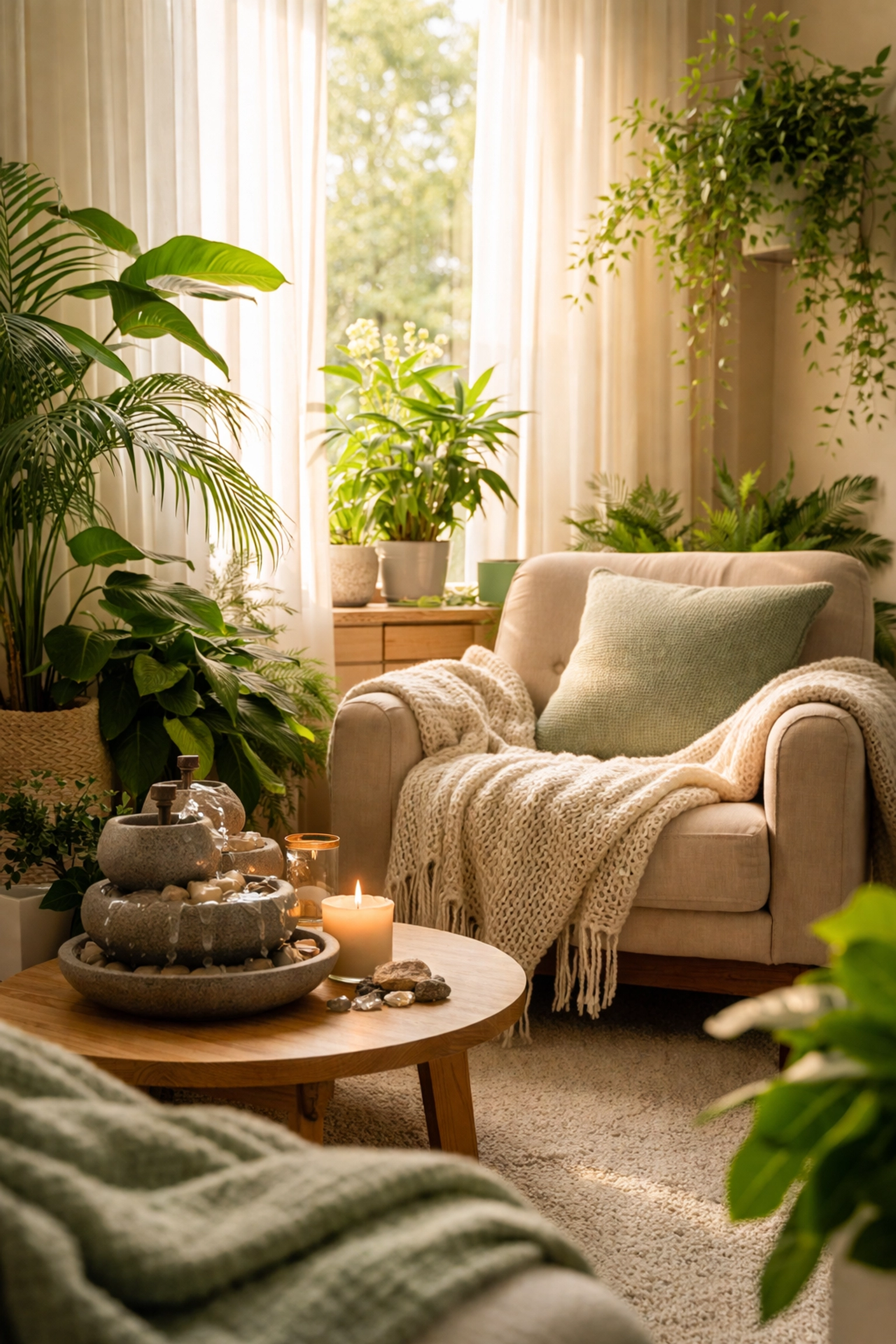
2. Incorporate Biophilic Design (Plants, Natural Light, and All the Good Vibes)
Here's a simple truth: nature heals. And bringing elements of nature into your workspace can dramatically shift the energy.
Biophilic design is all about connecting people to the natural world through intentional design choices. This includes:
Plants (real ones are best, but high-quality faux plants work too!)
Natural light (open those blinds!)
Nature sounds or water features
Earthy textures and colors
Views of greenery when possible
These elements reduce stress hormones, lower blood pressure, and help regulate our nervous systems. When staff work in environments that feel alive and connected to nature, they're more creative, more focused, and less likely to burn out.
Even small changes: like adding a few plants to a common area or swapping harsh fluorescent lighting for warmer alternatives: can make a noticeable difference in how your team feels throughout the day.
3. Establish 'No-Work' Zones
This one sounds simple, but it's revolutionary: create spaces where work talk is off-limits.
We need boundaries. Physical, emotional, and conversational boundaries. A no-work zone is a designated area: or even a designated time: where staff can gather without discussing deadlines, student issues, or that email from administration.
This might look like:
A corner of the staff lounge with a sign that says "Restoration Station: No Shop Talk"
A weekly 15-minute "reset break" where the only agenda is connection
Walking paths or outdoor spaces designated for mental breaks only
When we eliminate the expectation that employees work through breaks, we give their brains a chance to actually rest. And rested brains are more effective, more creative, and way more resilient.
4. Sensory Regulation Tools for Adults
We talk a lot about sensory tools for kids: fidgets, weighted blankets, noise-canceling headphones. But guess what? Adults need these too!
Sensory regulation tools help our nervous systems shift from fight-or-flight mode back into a state of calm. For staff, this might include:
Stress balls or fidget tools at their desks
Essential oil diffusers with calming scents like lavender or eucalyptus
Weighted lap pads for grounding during meetings
Noise-reducing headphones for focus time
Textured items like soft blankets or smooth stones
These tools aren't childish: they're neuroscience in action. When we give adults permission to regulate their bodies, we empower them to show up more fully for themselves and everyone they serve.
Explore our Calm Space to see how sensory-informed design can support regulation for all ages.

5. Mindfulness and Breathing Breaks
You don't need an hour-long yoga class to experience the benefits of mindfulness. Sometimes, all it takes is two minutes and a few deep breaths.
Mindfulness and breathing breaks are micro-moments of restoration that can be woven into any workday. Here are a few ideas:
Start staff meetings with a 60-second grounding exercise
Create a "breathing break" reminder that pops up on screens twice a day
Offer optional guided meditations during lunch breaks
Post simple breathing techniques in common areas (like box breathing or 4-7-8 breathing)
These practices activate our parasympathetic nervous system: the part responsible for rest and digest. Over time, regular mindfulness practice rewires our brains to be more resilient to stress.
And the best part? It's free, it's accessible, and anyone can do it.
6. Restorative Circles for Staff Support
At 2 Inspire Peace, we're big believers in the power of restorative practices: and that includes restorative circles for staff.
A restorative circle is a structured conversation where participants sit in a circle, share openly, and listen deeply. There's no hierarchy, no agenda beyond connection, and no judgment. It's a space to be seen, heard, and supported.
For staff, restorative circles can:
Build trust and connection among colleagues
Provide a safe space to process challenges
Reduce feelings of isolation
Create shared accountability and support
Research shows that fostering team connection and shared accountability makes workloads feel lighter and challenges more manageable. When we invest in genuine relationships among staff, we build a culture where people actually want to show up.
7. Professional Development on Nervous System Awareness
Finally: and this is a big one: staff need education about what's happening in their bodies when they're stressed.
Professional development on nervous system awareness (what we like to call Self-Care Professional Development) teaches staff:
How the nervous system responds to stress
The science behind burnout and compassion fatigue
Practical tools for self-regulation
How to recognize signs of dysregulation in themselves and others
When staff understand why they feel the way they feel, they're empowered to do something about it. Knowledge is power, and this kind of training transforms workplace culture from the inside out.
We are so excited to offer workshops and training opportunities that support staff wellness and community wellness at every level. Visit our Events page to see what's coming up!

Peace Is a Practice: And It Starts with You
Here's the bottom line: staff burnout prevention isn't about adding more to your plate. It's about creating restorative environments that make wellness possible without extra effort.
When we design spaces, systems, and cultures that support the humans doing the hard work, everything changes. Students thrive because their teachers are regulated. Communities heal because the healers are cared for. And peace becomes more than a concept: it becomes a lived experience.
You deserve to feel whole. You deserve to feel supported. And you deserve environments that help you restore, not just survive.
Ready to take the next step? Explore our resources at 2 Inspire Peace and let's build something beautiful together. 💚


Comments