

How to Create a Trauma-Informed Wellness Space in 5 Steps (Easy Guide for Schools)

Let's be real, our schools are asking educators to do more than ever before. Teachers aren't just teaching curriculum anymore. They're navigating big emotions, supporting students through crisis, and often doing it all without the tools or spaces they need to be effective.
Here's the good news: creating a trauma-informed wellness space in your school doesn't have to be complicated, expensive, or overwhelming. In fact, with the right approach, these spaces can become powerful tools for supporting emotional regulation in schools, reducing behavioral referrals, and creating a culture of care that benefits everyone, students AND staff.
At 2 Inspire Peace, we've had the honor of partnering with districts like DeSoto ISD to bring Zen Dens to every campus, and we've seen firsthand how these spaces transform school climate. Now, we're sharing our step-by-step guide so YOU can create your own trauma-informed wellness space, what we lovingly call Serenity Suites.
Let's dive in! 🌿
Why Trauma-Informed Wellness Spaces Matter
Before we get into the "how," let's talk about the "why."
Research tells us that students who have experienced trauma often struggle with self-regulation, focus, and feeling safe in traditional classroom environments. When a child's nervous system is dysregulated, learning becomes nearly impossible. Punitive responses like suspensions or office referrals don't address the root cause, they often make things worse.
Trauma-informed care flips the script. Instead of asking "What's wrong with you?" we ask "What happened to you?" And instead of removing students from the learning environment, we give them a place to reset, regulate, and return ready to learn.
That's where school wellness spaces come in. These intentionally designed environments give students (and staff!) a physical refuge to process emotions, practice coping strategies, and restore their sense of safety.
Ready to build one? Here's how. 👇
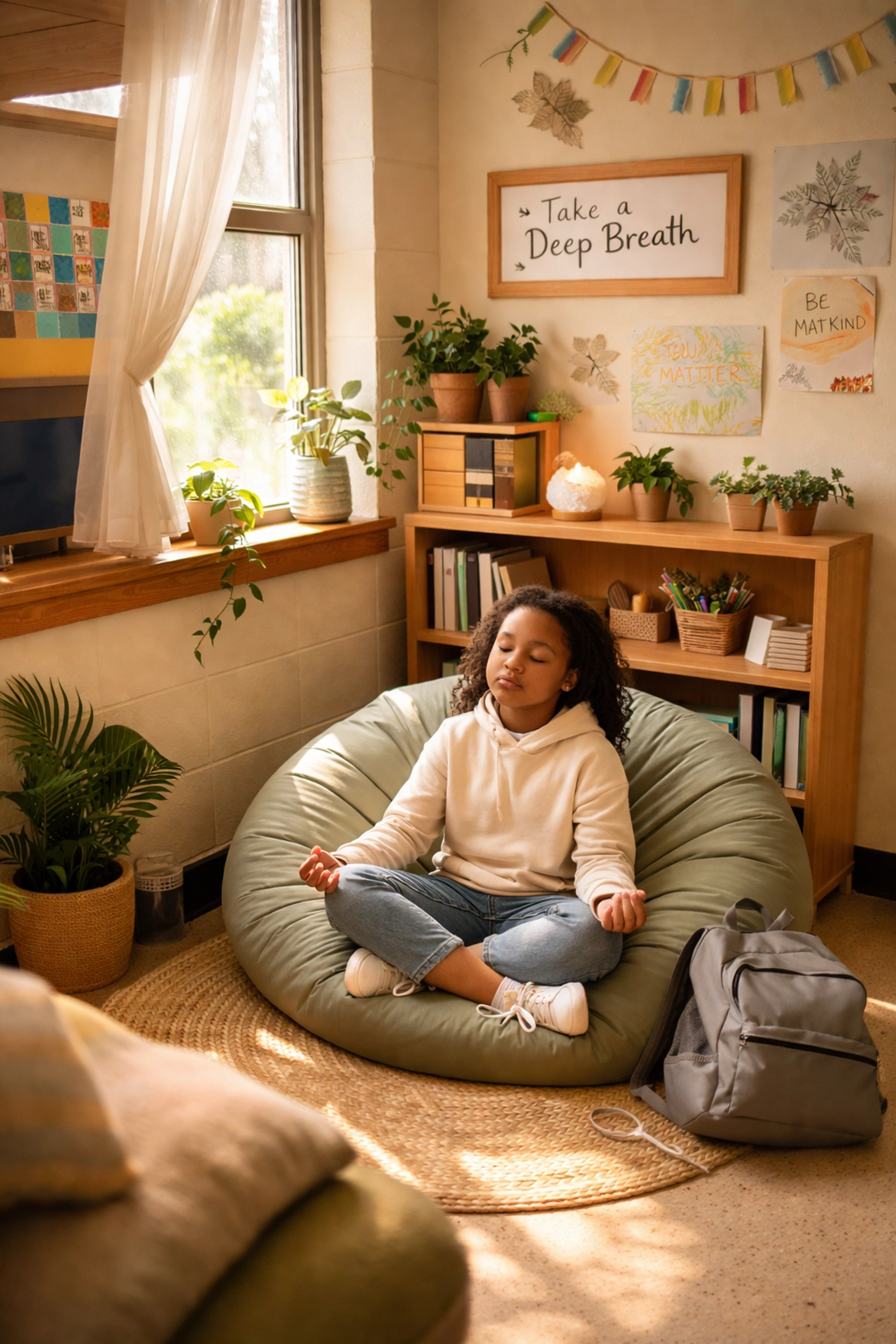
Step 1: Identify the Right Space
First things first, you need to find the perfect spot. And no, it doesn't have to be a huge room or a complete renovation!
Here's what to look for:
Pro tip: If you're working with limited space, consider creating "peace corners" within classrooms as a starting point. These mini wellness zones can serve as a bridge while you work toward a dedicated room.
Step 2: Design with Sensory-Informed Intention
Now comes the fun part, designing the space! This is where sensory-informed design makes all the difference.
Students who have experienced trauma often have heightened sensory sensitivities. Bright fluorescent lights, loud noises, and chaotic visual environments can trigger anxiety and dysregulation. Your wellness space should be the opposite of all that.
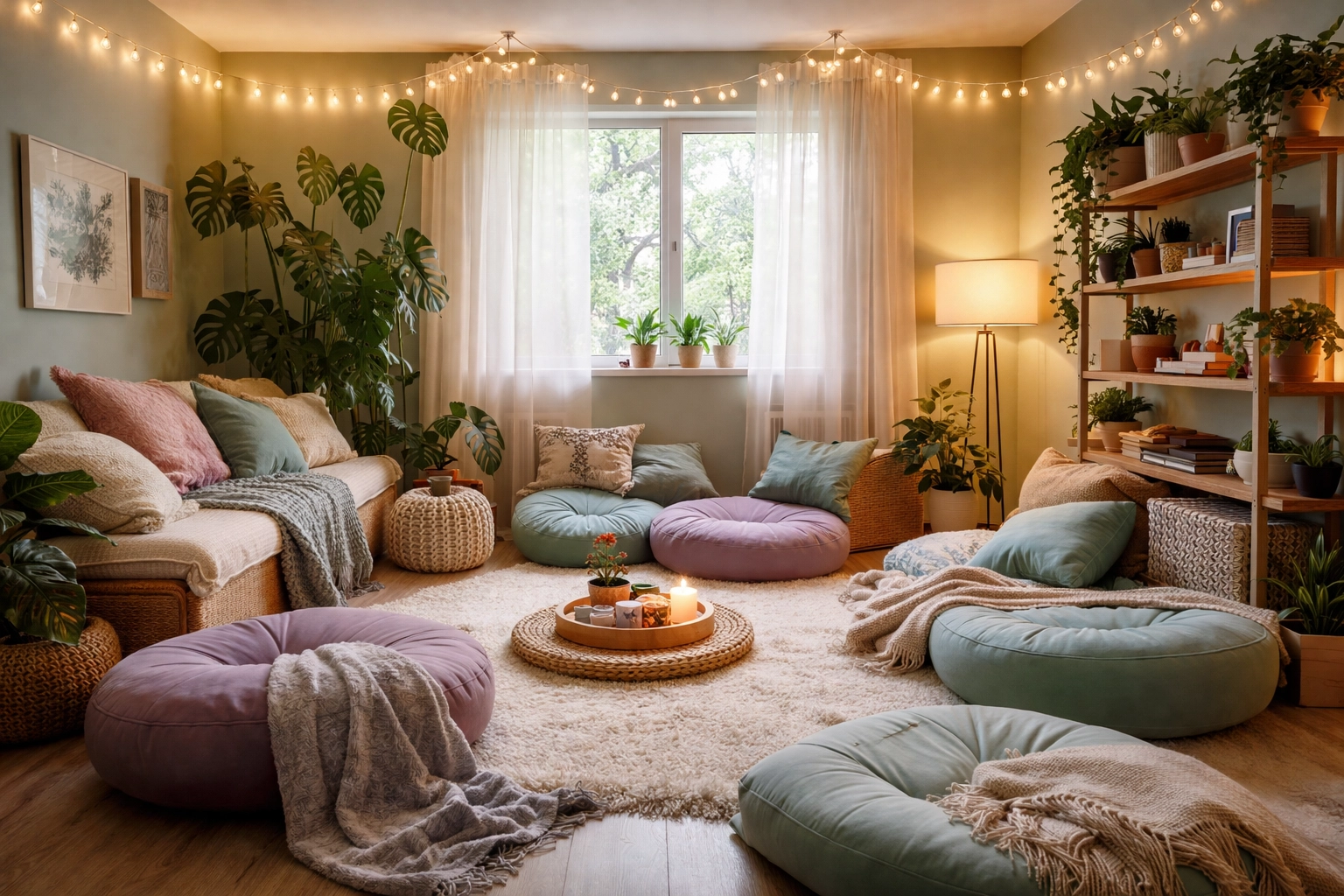
Lighting matters: Swap out harsh overhead lights for soft, warm lighting. Think lamps, string lights, or even color-changing LED options that students can adjust based on their needs. Natural light is wonderful if you have access to windows!
Colors create calm: Stick to soothing, neutral color palettes, soft blues, greens, lavenders, and earth tones. Avoid overly stimulating patterns or bright reds and oranges, which can increase agitation.
Textures invite regulation: Incorporate a variety of textures through pillows, blankets, rugs, and seating options. Soft, cozy materials help activate the parasympathetic nervous system (that's the "rest and digest" mode we want!).
Biophilic elements: Bringing nature indoors is a game-changer. Plants, nature sounds, natural wood elements, and even images of outdoor scenes can reduce stress and create a sense of peace.
Step 3: Zone the Space (Active vs. Passive Regulation)
Here's something many schools miss: not all regulation looks the same!
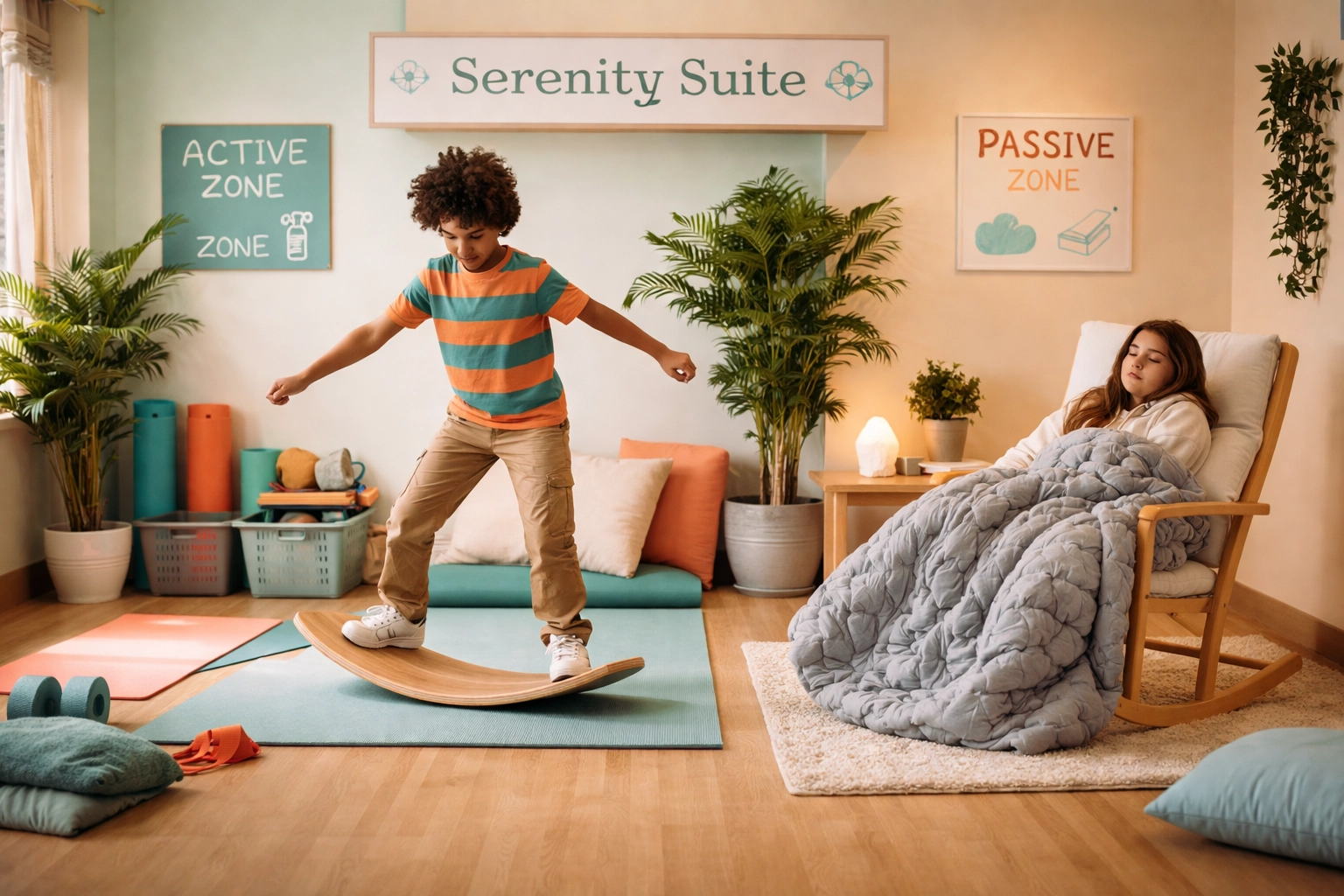
Some students need to move their bodies to release energy and stress. Others need stillness and quiet. A well-designed trauma-informed wellness space honors BOTH of these needs by creating distinct zones.
Active Regulation Zone: This area is for students who need to discharge energy. Include tools like:
Mini trampolines or balance boards
Resistance bands
Yoga mats for stretching
Movement cards or guided exercises
Passive Regulation Zone: This area is for students who need to slow down and restore. Include:
Comfortable seating (bean bags, floor cushions, rocking chairs)
Weighted blankets and lap pads
Soft lighting and calming visuals
Noise-canceling headphones
Connection Zone: Don't forget a small area where a trusted adult can sit with a student for one-on-one support. Sometimes what a child needs most is simply to feel seen and heard.
By zoning your space intentionally, you give students agency to choose what their body needs in the moment, and THAT is where real learning about self-regulation happens.
Step 4: Choose the Right Tools
Okay, let's talk tools! This is where your Serenity Suite really comes to life. But here's a word of caution: more isn't always better. You want to be intentional about what you include so the space doesn't become cluttered or overwhelming.
Fidgets and tactile tools: Stress balls, textured putty, fidget spinners, and sensory rings give students something to do with their hands while they regulate.
Weighted items: Weighted blankets, stuffed animals, and lap pads provide deep pressure input, which is incredibly calming for the nervous system.
Sound tools: Consider a small sound machine with nature sounds, a rain stick, chimes, or even a curated playlist of calming music. Sound healing is a powerful (and often overlooked) regulation strategy!
Visual supports: Emotion charts, breathing technique posters, and affirmation cards help students identify what they're feeling and guide them toward coping strategies.
Aromatherapy (with caution): Calming scents like lavender can be helpful, but be mindful of allergies and sensitivities. Essential oil diffusers or scented items should be optional, not overwhelming.
For a deeper dive into curating the perfect toolkit, check out our Ultimate Guide to Creating Serenity Suites.
Step 5: Implementation & Training
Here's the truth: the most beautiful wellness space in the world won't make an impact if staff don't know how to use it effectively.
Train your team: Provide professional development for ALL school personnel: not just counselors: on trauma-informed practices, recognizing signs of dysregulation, and guiding students to use the space appropriately. When everyone is on the same page, the space becomes a true schoolwide resource.
Create clear protocols: Who can access the space? How do students request to go? How long can they stay? What does re-entry to class look like? Having clear, consistent procedures helps students feel safe and prevents misuse.
Normalize the space: This is KEY. Wellness spaces should not be seen as punishment or a place "bad kids" go. Normalize regulation for EVERYONE. Let staff use the space too! When adults model healthy coping, students learn that taking care of your mental health is just... what we do here.
Connect to MTSS goals: Trauma-informed wellness spaces align beautifully with Multi-Tiered System of Supports (MTSS) frameworks. They serve as a Tier 1 prevention tool for all students, a Tier 2 intervention for students needing additional support, and a Tier 3 resource for students in crisis. Documenting usage and outcomes helps you demonstrate impact and advocate for continued investment.
You Don't Have to Do This Alone
Creating a trauma-informed wellness space is one of the most impactful investments a school can make: but we know it can feel like a lot. That's why 2 Inspire Peace is here to help.
From consultation and design support to full Serenity Suite installations, we partner with schools and districts to bring these healing spaces to life. We've seen the transformation in places like DeSoto ISD, and we'd love to support YOUR community next.
Because peace is a practice. And healing? It can absolutely be hands-on. 💚
Ready to get started? Visit our website or explore The Serenity Experience to learn more about bringing wellness spaces to your school.


Comments