

The Ultimate Guide to Creating Serenity Suites: Everything You Need to Transform School Climate

Schools across America are facing unprecedented challenges. From rising behavioral incidents to staff burnout, educators are searching for innovative solutions that address the root causes rather than just the symptoms. That's where Serenity Suites come in: thoughtfully designed spaces that honor the need for healing, reflection, and emotional regulation within our educational environments.
At 2 Inspire Peace, we've witnessed firsthand how these immersive, thoughtfully curated environments can completely transform school climate. Our ongoing collaboration with DeSoto Independent School District has shown us that when schools invest in dedicated wellness spaces, the ripple effects touch every corner of the campus community.
Why Serenity Suites Matter More Than Ever
The mental health crisis in our schools isn't just a trending topic: it's a daily reality for millions of students and educators. Traditional disciplinary approaches often escalate situations rather than resolve them, creating a cycle of disruption that affects everyone's learning environment.
Serenity Suites break this cycle by providing a proactive approach to emotional wellness. These aren't just "quiet rooms" or temporary fixes. They're strategic investments in your school's emotional infrastructure that create lasting positive change.

For Students: Serenity Suites offer a safe harbor during emotional storms. Instead of escalating to office referrals or suspensions, students can access tools and environments that help them self-regulate and return to learning with renewed focus.
For Staff: These spaces acknowledge that educators are human beings who need moments of respite and restoration. When teachers have access to wellness resources, they show up more present and patient for their students.
For Administrators: Data from schools implementing Serenity Suites consistently shows reduced behavioral incidents, decreased staff turnover, and improved overall school climate metrics.
Planning Your Serenity Suite: Where to Begin
Creating an effective Serenity Suite requires intentional planning that goes far beyond choosing paint colors and furniture. The most successful implementations begin with understanding your school's unique needs and challenges.
Conducting a Climate Assessment
Before breaking ground, conduct a comprehensive assessment of your current school climate. Survey students, staff, and families about their biggest stressors and what kind of support would be most helpful. Look at your behavioral incident data: when do most disruptions occur? Where do they happen? What triggers seem most common?
This data will inform every decision you make about your Serenity Suite, from location to programming to staffing.
Identifying Your Space
The ideal Serenity Suite doesn't need to be enormous, but it should be easily accessible and naturally conducive to calm. Look for spaces with:
Natural light when possible
Minimal noise disruption from hallways or cafeterias
Adequate ventilation and temperature control
Proximity to both student and staff areas
Many schools successfully convert unused classrooms, portions of libraries, or even repurpose detention rooms into healing spaces. The key is ensuring the location feels welcoming rather than punitive.
Essential Elements of an Effective Serenity Suite
Every successful Serenity Suite incorporates both environmental and programmatic elements that work together to create a holistic wellness experience.
Environmental Design
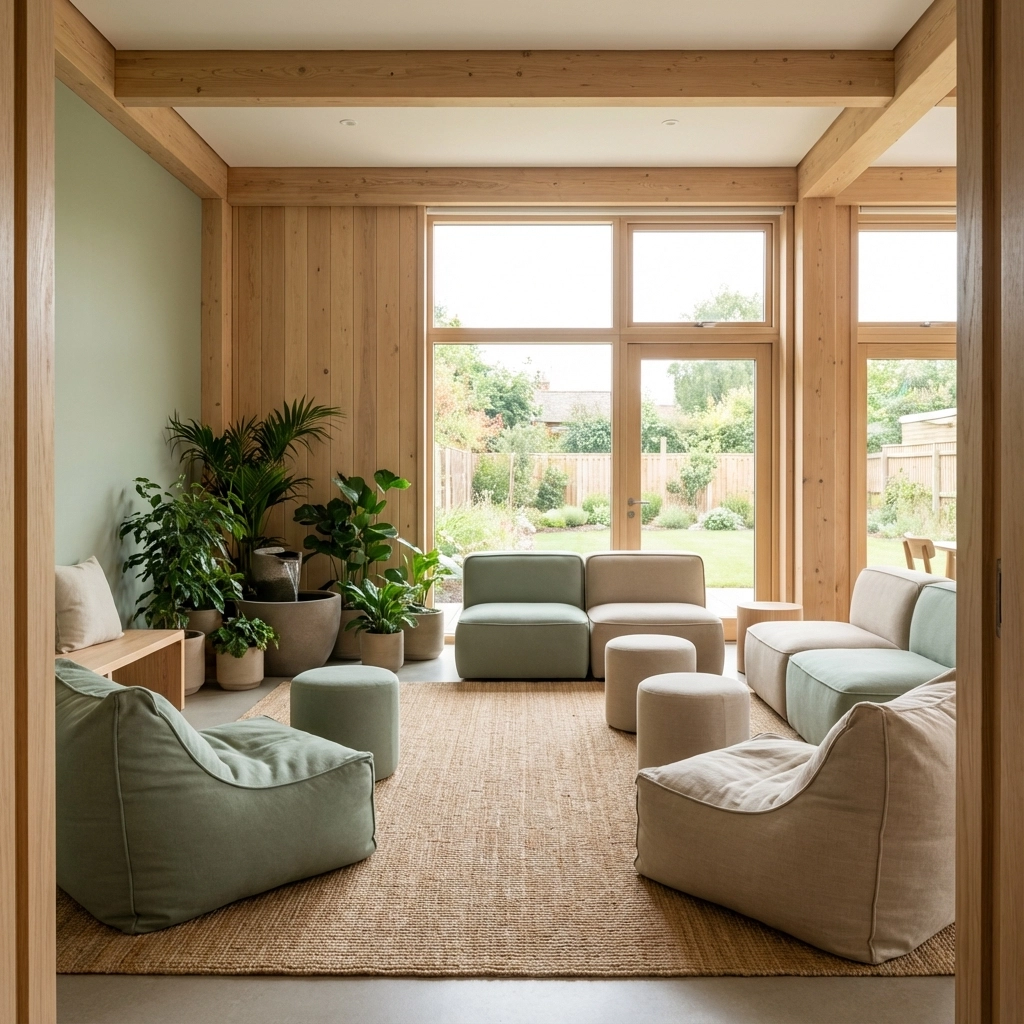
Sensory Considerations: Incorporate soft lighting options, calming color schemes, and natural elements like plants or water features. Consider adding blackout capabilities for students who need complete sensory breaks.
Flexible Seating: Include various seating options from bean bags and floor cushions to traditional chairs and standing desks. Different students find comfort in different positions, and choice is empowering.
Technology Integration: Tablets with guided meditation apps, noise-canceling headphones, and sound machines can provide personalized calming experiences. Some schools include biofeedback devices that help students visualize their regulation progress.
Comfort Items: Weighted blankets, fidget tools, stress balls, and other tactile resources give students concrete tools for self-soothing.
Programming and Staffing
The most beautiful space in the world won't transform school climate without proper programming and trained facilitators. Your Serenity Suite needs:
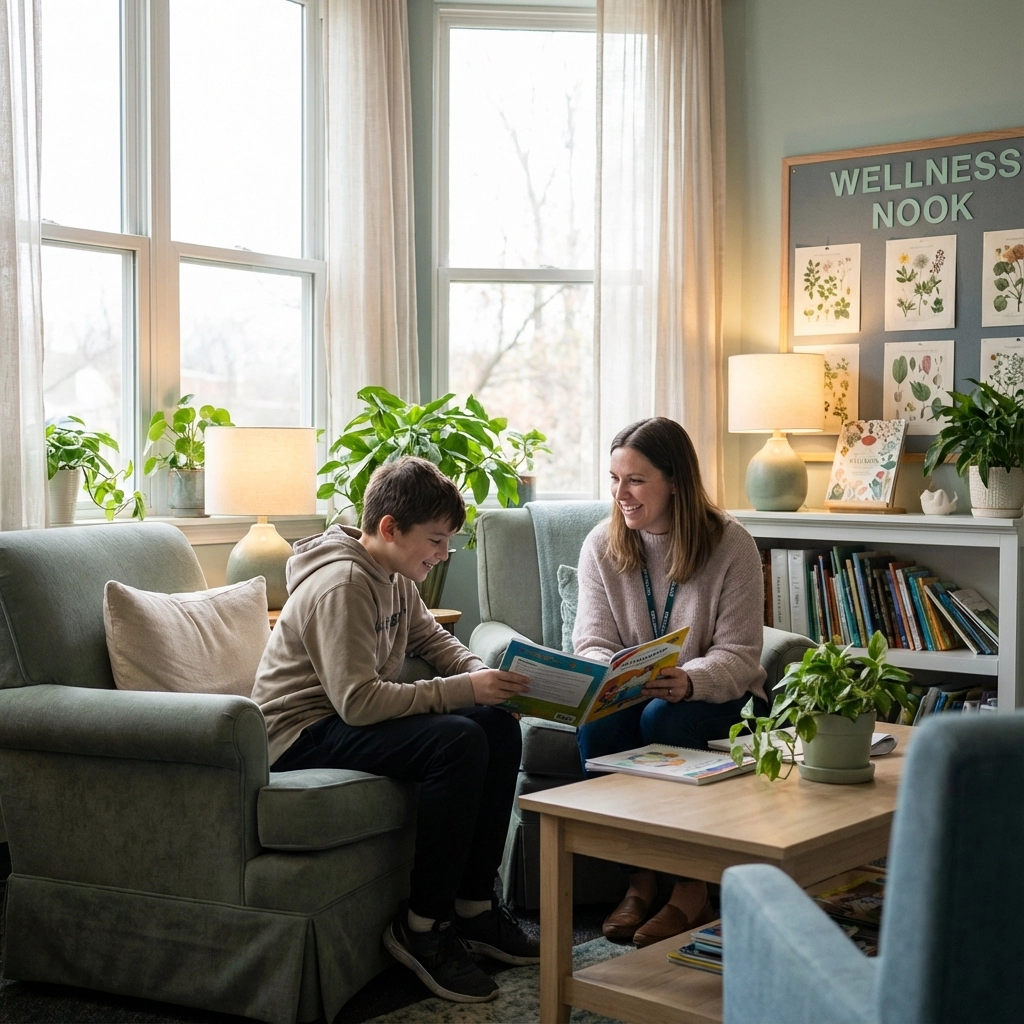
Trained Staff: Whether it's a dedicated wellness coordinator, counselor, or trained paraprofessional, someone needs to understand trauma-informed practices and de-escalation techniques.
Clear Protocols: Develop procedures for when and how students access the space, how long visits typically last, and what follow-up looks like.
Curriculum Integration: Consider how the Serenity Suite can support your existing SEL (Social-Emotional Learning) programming and academic goals.
Implementation: From Vision to Reality
Rolling out your Serenity Suite successfully requires strategic implementation that builds buy-in from all stakeholders while maintaining focus on your core goals.
Phase One: Foundation Building
Start with intensive staff training on trauma-informed practices and the philosophy behind restorative environments. Every team member: from teachers to custodial staff: should understand how the Serenity Suite fits into your school's broader wellness approach.
Develop clear referral processes and communication protocols. Students, staff, and families need to understand when and how the space can be accessed, what to expect during visits, and how it connects to other support services.
Phase Two: Soft Launch
Begin with a limited pilot program, perhaps focusing on specific grade levels or student populations. This allows you to refine processes, gather feedback, and demonstrate success before full implementation.
Track both quantitative metrics (behavioral incidents, attendance, academic performance) and qualitative feedback (student surveys, staff observations, family input) during this phase.
Phase Three: Full Implementation and Expansion
As your Serenity Suite becomes integrated into daily school operations, look for opportunities to expand impact. This might include peer mediation programs, family workshops, or community partnerships that extend healing beyond school hours.
Measuring Success: Data That Matters
Successful Serenity Suite programs track multiple indicators of impact, creating a comprehensive picture of how these spaces transform school climate.
Behavioral Metrics: Monitor suspension rates, office referrals, and incident reports. Schools consistently report 30-50% reductions in these areas after implementing Serenity Suites.
Academic Indicators: Track attendance rates, academic performance, and graduation statistics. When students feel emotionally supported, academic achievement naturally improves.
Wellness Measures: Survey data about student and staff stress levels, sense of belonging, and overall school satisfaction provide crucial insight into your program's effectiveness.
Relationship Quality: Assess improvements in student-teacher relationships, peer interactions, and family engagement. These relationship metrics often show the most dramatic positive changes.

Learning from Success Stories
Our partnership with DeSoto Independent School District demonstrates the transformative power of Serenity Suites: or as they call them, "Zen Dens": in real-world settings. Each campus now features these thoughtfully designed spaces that support both student and staff well-being.
The results speak for themselves: reduced behavioral incidents, increased staff retention, and a campus culture that prioritizes emotional wellness alongside academic achievement. Students report feeling more supported and understood, while teachers describe renewed energy and job satisfaction.
These successes didn't happen overnight, but through careful planning, consistent implementation, and unwavering commitment to creating healing-centered environments.
Your Journey Begins Now
Creating a Serenity Suite isn't just about transforming a physical space: it's about fundamentally shifting how your school community approaches emotional wellness, conflict resolution, and human dignity.
We are so excited to see more schools embracing this approach and hope to inspire more educational leaders to invest in the emotional infrastructure that makes learning possible for every student.
As part of its ongoing commitment to supporting school wellness initiatives, 2 Inspire Peace offers consultation, training, and resources to help schools implement successful Serenity Suite programs.

The path to transforming school climate begins with a single step: believing that every student and educator deserves access to spaces and practices that honor their emotional needs. Your Serenity Suite can be the catalyst that creates ripple effects of healing throughout your entire school community.
Ready to take the first step? Start with a conversation. Gather your team, assess your needs, and begin envisioning how a Serenity Suite could transform your school's climate. The journey toward creating more healing-centered educational environments starts with schools like yours taking bold action.
Remember: you're not just creating a room: you're cultivating a culture of care that will impact generations of learners. That's the true power of Serenity Suites, and that's why this work matters so much.


Comments