

Struggling With Emotional Regulation in Schools? 15 Calming Space Ideas That Reduce Referrals

Let's be real: emotional regulation in schools isn't just a buzzword. It's the difference between a student who can reset and return to learning and one who ends up in the principal's office with another referral on their record.
Here's the thing: kids aren't giving us a hard time. They're having a hard time. And when we shift our perspective from "What's wrong with you?" to "What do you need?": that's when the magic happens.
One of the most powerful tools we have? The environment itself.
The Connection Between Environment and Behavior
Think about it. When you walk into a spa, your shoulders drop. When you enter a cluttered, noisy space, your anxiety spikes. Kids are no different: except they often don't have the words or skills to articulate what they're feeling.
Research consistently shows that calming space ideas implemented thoughtfully in schools can significantly reduce behavioral incidents. When students have access to a designated area where they can decompress, they develop a stronger sense of safety, autonomy, and belonging. And when kids feel safe? They regulate better. They learn better. They do better.
This isn't about coddling. It's about neuroscience. A dysregulated nervous system can't access the prefrontal cortex: the part of the brain responsible for learning, reasoning, and decision-making. So if we want kids to succeed academically, we have to address their emotional needs first.
Why Calming Spaces Beat Punitive Discipline Every Time
Traditional discipline models often look like this: Student acts out → Student gets sent out → Student misses instruction → Student falls behind → Student acts out again.
See the cycle?
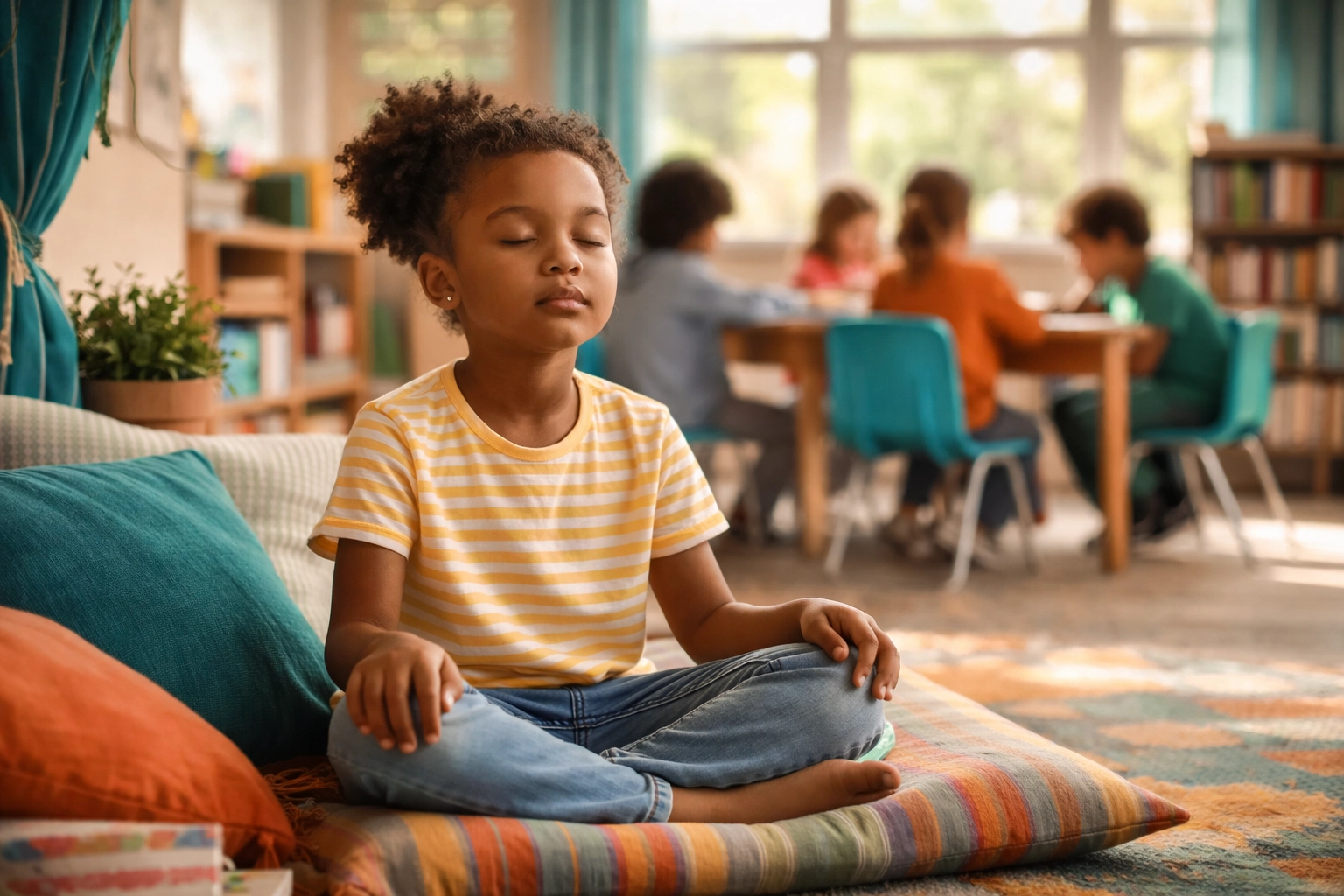
Calming spaces break that cycle by offering a non-punitive alternative. Instead of removing a student from the learning environment as punishment, we're giving them a tool to self-regulate and return ready to engage.
This approach aligns beautifully with SEL programming (Social-Emotional Learning), which emphasizes self-awareness, self-management, and responsible decision-making. When students learn to identify their emotions and use healthy coping strategies, behavioral incident reduction isn't just possible: it's inevitable.
We are so excited to share that our work with districts like DeSoto ISD has shown incredible results. Their implementation of Zen Dens across every campus has transformed how students and staff approach emotional wellness. These immersive, thoughtfully curated environments honor the need for rest, reflection, and restoration.
15 Calming Space Ideas That Actually Work
Ready to create your own calming corner, Zen Den, or Serenity Suite? Here are 15 practical ideas you can implement today: no massive budget required.
1. Floor Cushions and Bean Bags
Soft, flexible seating signals to the body that it's time to relax. Floor cushions and bean bags give students a cozy spot to decompress without the rigidity of traditional classroom furniture.
2. Soft, Warm Lighting
Harsh fluorescent lights can be overstimulating. Swap in some soft lamps, fairy lights, or LED candles to create a calmer atmosphere. Bonus points for dimmable options!
3. Weighted Lap Pads
Weighted items provide deep pressure input, which can be incredibly soothing for the nervous system. Lap pads are perfect for students who need grounding without being too conspicuous.
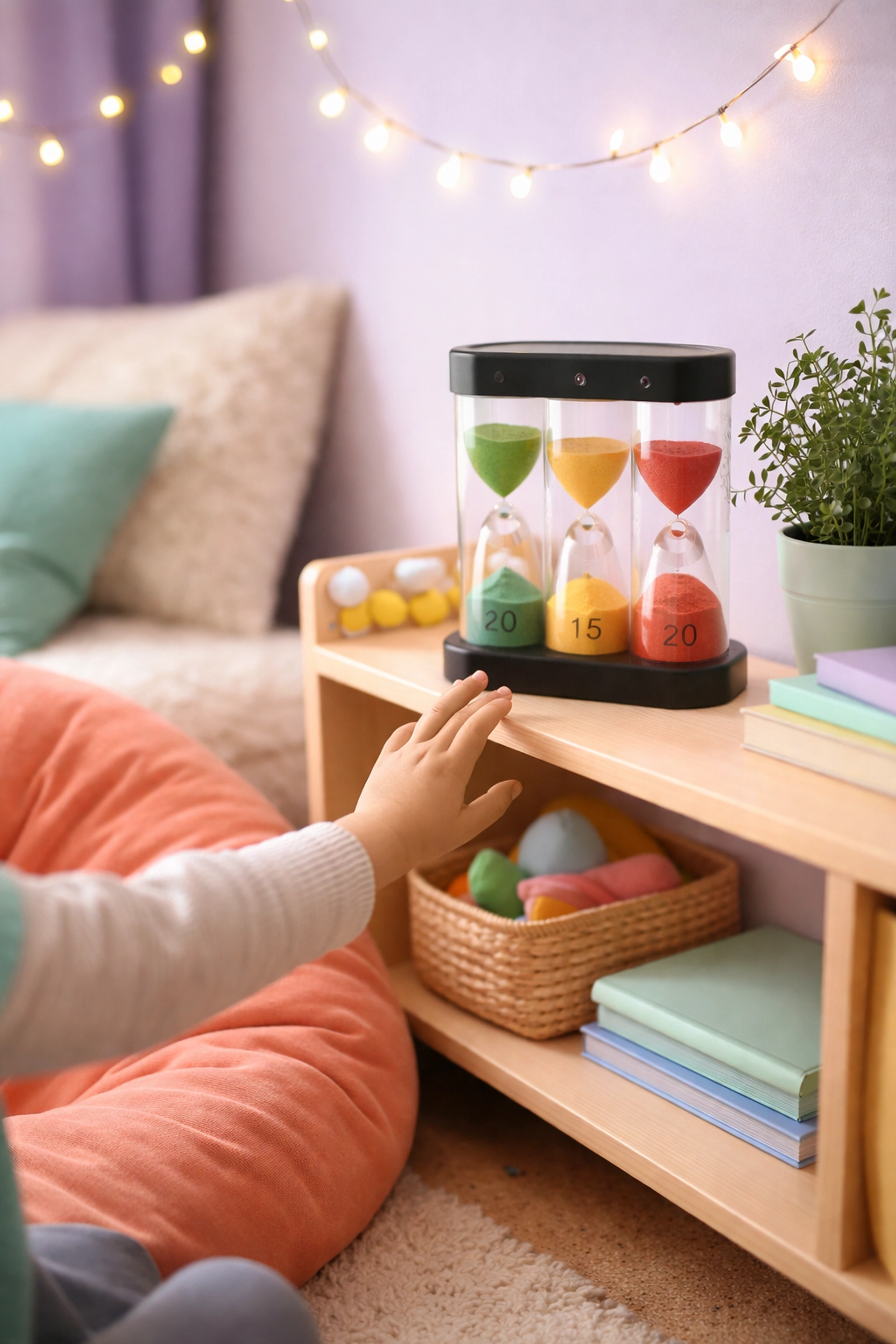
4. Visual Timers
Sometimes kids just need to know there's an end in sight. Visual timers help students understand how long they have in the calming space and build time-management skills in the process.
5. Noise-Canceling Headphones
For students who are sensitive to auditory input, noise-canceling headphones can be a game-changer. Pair them with calming music or nature sounds for maximum effect.
6. Reflection Journals
Writing (or drawing!) about feelings helps students process emotions. Keep simple journals or emotion worksheets in your calming space for students to use independently.
7. Breathing Exercise Charts
Visual guides for box breathing, belly breathing, or 4-7-8 breathing give students a concrete strategy to try. Laminate them and post them at eye level.
8. Fidget Stations
Fidget spinners, stress balls, tangles, and putty give restless hands something to do. Create a small station with a variety of options so students can find what works for them.
9. Nature Sounds or White Noise
A small speaker playing ocean waves, rain, or forest sounds can transport students out of their stress and into a more peaceful mental space.
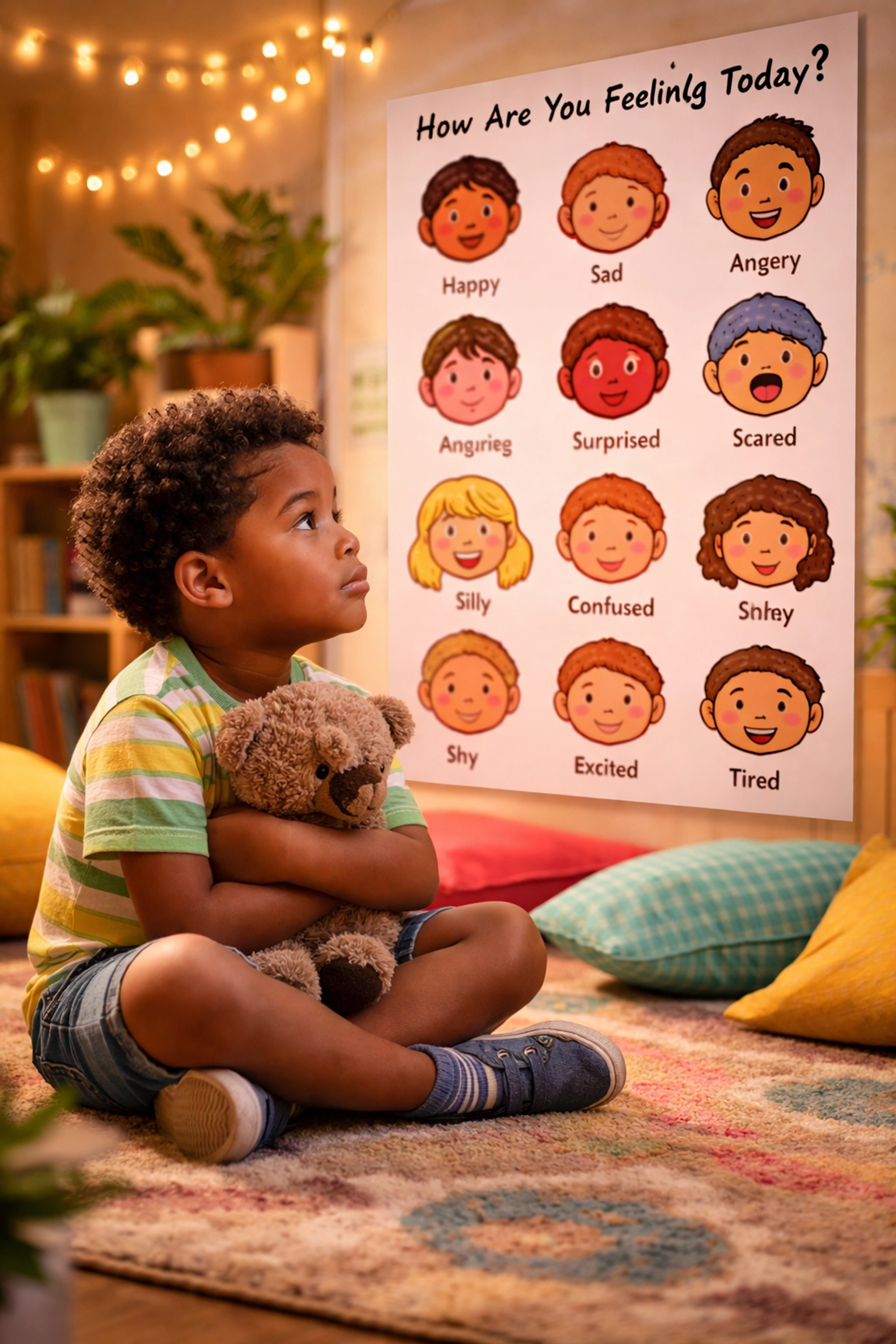
10. Emotion Identification Posters
Sometimes students don't know what they're feeling. Posters with faces and feeling words help them build emotional vocabulary and self-awareness.
11. Soft Stuffed Animals or Comfort Items
For younger students especially, a soft toy to hold can provide comfort and security. Some schools even use "breathing buddies" for mindfulness exercises.
12. Mindfulness Activity Cards
Pre-made cards with simple mindfulness prompts: like "Name 5 things you can see" or "Take 3 deep breaths": give students direction without requiring adult intervention.
13. Aromatherapy (When Appropriate)
Lavender, chamomile, or eucalyptus scents can have calming effects. Use diffusers or scented items cautiously, keeping allergies and sensitivities in mind.
14. Privacy Screens or Tent Canopies
Sometimes students just need a little visual separation from the classroom. A small tent, canopy, or privacy screen creates a sense of sanctuary.
15. Calm-Down Choice Menus
Empower students by giving them options. A simple menu that says "When I'm feeling overwhelmed, I can: take deep breaths, use a fidget, listen to music, or write in my journal" builds autonomy and self-regulation skills.
Introducing Serenity Suites: Next-Level Calming Spaces
If you're ready to take your calming space to the next level, let us tell you about Serenity Suites.
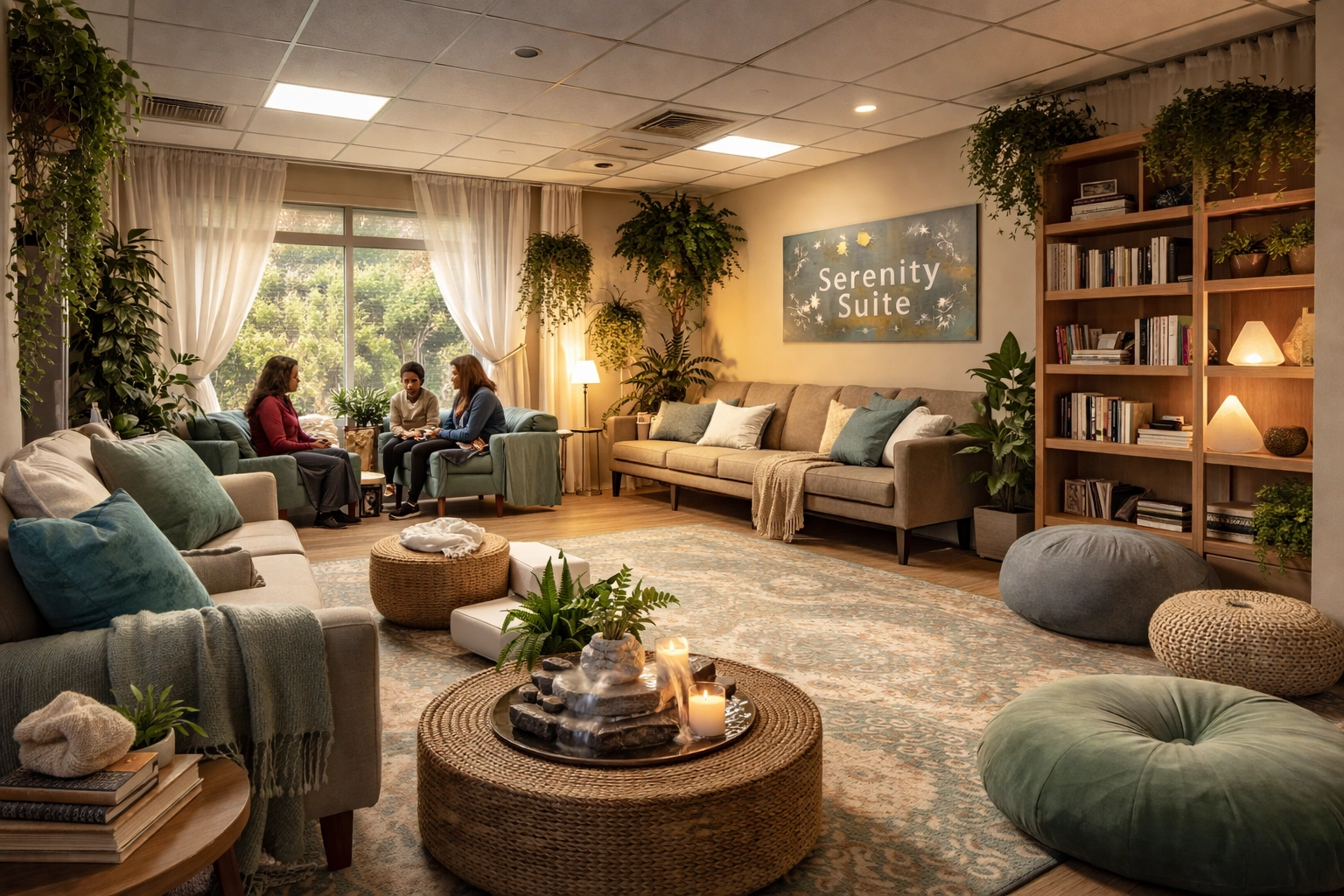
2 Inspire Peace is proud to partner with school districts to create immersive wellness environments that go beyond a simple calm corner. Our Serenity Suites are thoughtfully designed spaces that integrate sensory tools, mindfulness resources, and restorative practices into one cohesive experience.
The results? Districts implementing Serenity Suites have reported significant behavioral incident reduction, improved student attendance, and higher staff morale. When everyone has access to a space for regulation and restoration, the entire school climate shifts.
Want to learn more? Check out The Ultimate Guide to Creating Serenity Suites for everything you need to transform your school climate.
Making It Work: Tips for Implementation
Creating a calming space is one thing. Making sure it's used effectively is another. Here are a few tips:
Teach students how to use it. Don't just point to the corner and hope for the best. Model the tools, practice the breathing exercises together, and normalize using the space.
Make it accessible: not a reward. Calming spaces shouldn't be something students "earn." They should be available to anyone who needs them, anytime.
Involve students in the design. When kids have ownership over the space, they're more likely to respect and use it appropriately.
Check in regularly. Use the space as an opportunity for co-regulation. A quick "I notice you're having a tough moment. Would you like to take a break?" goes a long way.
Peace Is a Practice
At the end of the day, emotional regulation in schools isn't about perfection. It's about progress. It's about giving students (and staff!) the tools they need to navigate big feelings without falling apart.
Calming spaces aren't a magic fix: but they're a powerful piece of the puzzle. When combined with strong SEL programming, restorative practices, and a trauma-informed approach, these spaces can genuinely transform school culture.
Ready to get started? Explore our resources at The Calm Space or The Serenity Experience to bring peace and healing to your school community.
Because every student deserves a safe place to land. 💚


Comments