

The Power of Restorative Practice: Building Resilient Schools and Families

When a student acts out in class, what happens next can change everything. Traditional discipline approaches often lead to suspensions, office referrals, and a cycle that pushes students further away from learning. But what if there was a better way? What if conflict could become an opportunity to build stronger relationships and create lasting healing?
This is the transformative power of restorative practices: and it's reshaping how schools approach discipline, emotional regulation, and community building across the nation.
The Challenge: Breaking the Cycle of Punitive Discipline
Schools nationwide are grappling with rising behavioral incidents, student disengagement, and staff burnout. Traditional zero-tolerance policies have created environments where students: particularly those from marginalized communities: face disproportionate consequences that remove them from learning rather than addressing root causes.
The statistics are sobering: punitive discipline approaches disproportionately affect students of color and low-income students, creating what many educators call the "school-to-prison pipeline." Meanwhile, teachers and administrators feel overwhelmed, lacking the tools to address complex trauma responses and emotional regulation challenges in meaningful ways.
But across the country, innovative schools are discovering that restorative practices offer a research-backed alternative that doesn't just manage behavior: it transforms entire school cultures.
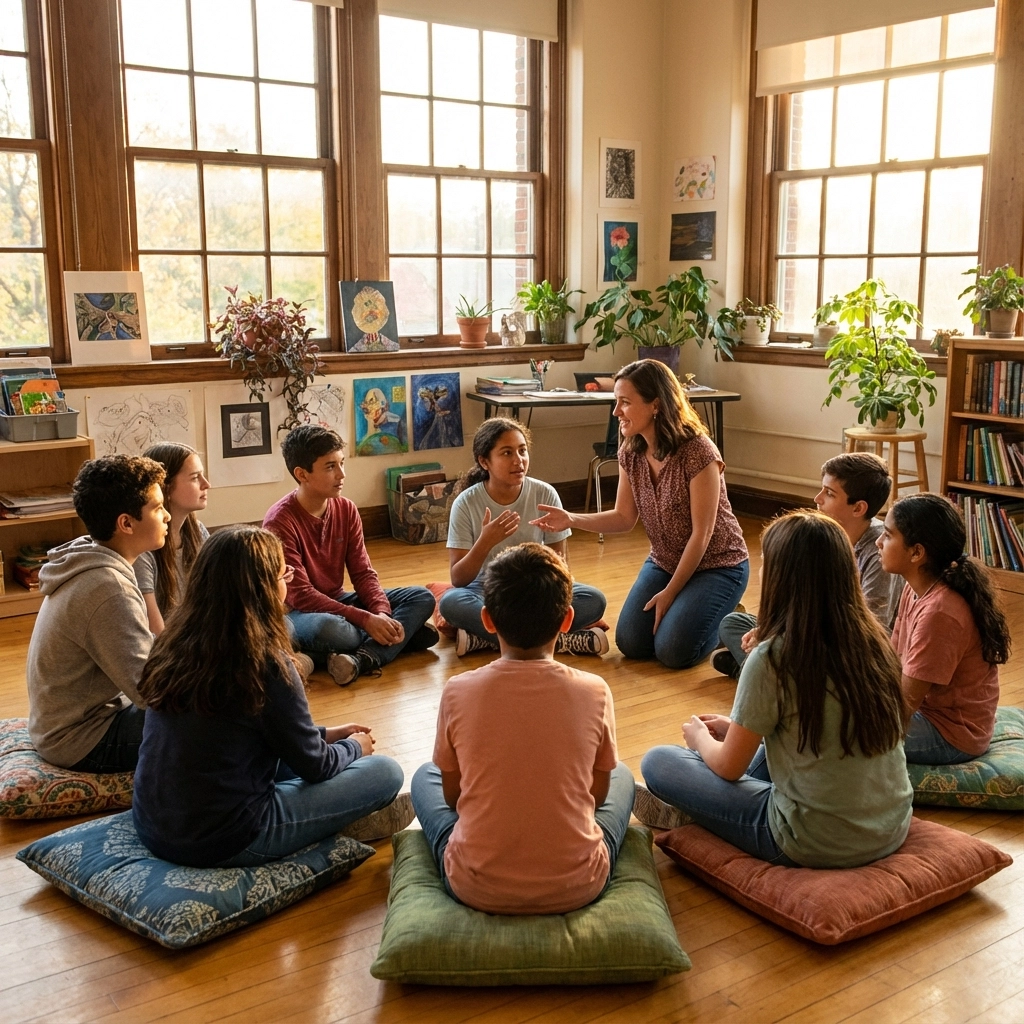
What Makes Restorative Practices So Powerful?
Restorative practices operate on a fundamental belief that all students are worthy and deserving, that behavior is learned, and that specific incidents are extensions of deeper issues needing resolution. Rather than asking "What rule was broken and what punishment fits?" restorative approaches ask three transformative questions:
What happened?
Who was affected?
What can be done to make it right?
This shift from punishment to accountability creates space for genuine healing and relationship repair. Research from California's large-scale implementation shows that students with greater exposure to restorative practices experience measurable improvements in behavior, mental health, and academic outcomes: with particularly strong effects for Black and Latino/a students.
The framework centers on building community before problems arise through proactive relationship-building, while also providing responsive practices that activate after conflict occurs. This dual approach creates environments where students develop essential social-emotional skills: self-management, social awareness, relationship building, and responsible decision-making.
2 Inspire Peace's Restorative Practices Training: Building Healing-Centered Cultures
At 2 Inspire Peace, we are proud to offer comprehensive Restorative Practices Training designed specifically for schools, nonprofits, and public agencies ready to transform their approach to discipline and community building.
Our evidence-based training program includes restorative circles that bring communities together for dialogue and healing, conflict repair practices that address harm while maintaining relationships, trauma-informed communication strategies that honor each person's experience, and implementation coaching to ensure sustainable culture change.
The outcomes speak for themselves: schools implementing our training see fewer discipline referrals, stronger relationships between students and staff, and dramatically improved school climate and trust. But perhaps most importantly, they create environments where students feel genuinely seen, heard, and valued.

Creating Restorative Environments: The Role of Serenity Suites
Restorative practices aren't just about how we respond to conflict: they're about creating physical environments that support emotional regulation and self-management. That's why 2 Inspire Peace developed Serenity Suites (Zen Dens): thoughtfully curated restorative wellness spaces that serve as the physical foundation for emotional healing.
These immersive environments feature zoned design that includes sensory areas for students who need tactile input, calming spaces for decompression and emotional regulation, grounding zones that help students reconnect with their bodies and breath, and restorative areas designed for reflection and self-care.
Each Serenity Suite includes carefully selected furniture and lighting that promotes calm, sensory tools that support different learning styles and trauma responses, comprehensive implementation support and staff orientation, and usage guidance with evaluation tools to measure impact.
The results are remarkable: reduced stress and behavioral escalation, improved emotional regulation across all student populations, and enhanced staff and student retention as school climate transforms. These spaces become sanctuaries where the principles of restorative practice come alive through environmental design.
The Science Behind Emotional Regulation in Schools
Understanding trauma-informed care is essential to implementing effective restorative practices. When students experience adversity: whether from poverty, family instability, community violence, or other challenges: their nervous systems can become dysregulated, making traditional learning and behavior expectations nearly impossible to meet.
Restorative environments and practices work because they honor the body's natural stress responses while providing tools for regulation. In Serenity Suites, students learn to recognize their emotional states, practice breathing and grounding techniques, engage their senses in healthy ways, and develop personalized self-regulation strategies.
This isn't just feel-good programming: it's neuroscience in action. When students feel safe and supported, their brains can access higher-order thinking skills necessary for learning, relationship building, and problem-solving.
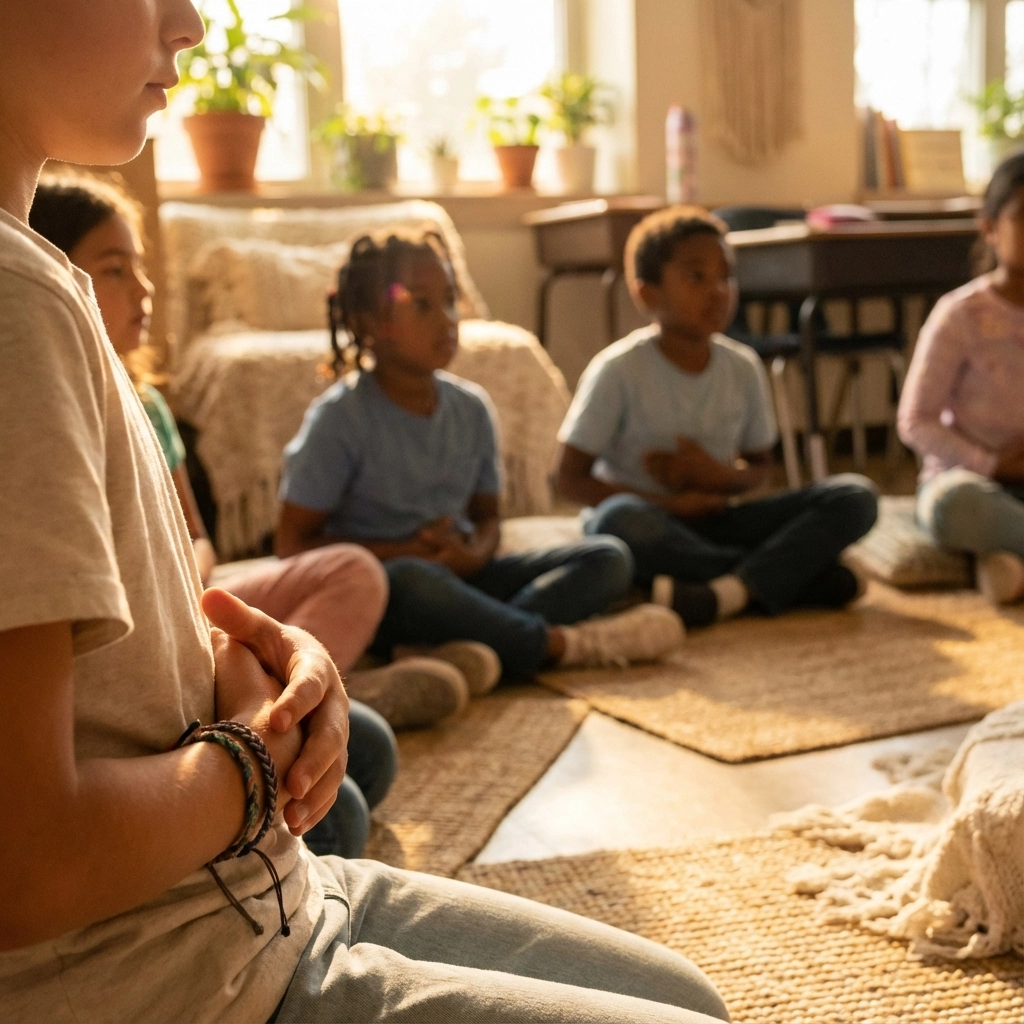
Real Results: Behavioral Incident Reduction Through Relationship Building
Schools partnering with 2 Inspire Peace consistently report significant reductions in behavioral incidents, but the transformation goes far deeper than numbers. When restorative practices become embedded in school culture, the entire ecosystem shifts.
Students develop leadership and facilitation skills through peer mediation programs. Teachers report feeling more confident and equipped to handle challenging situations. Administrators see improved attendance, academic engagement, and family satisfaction. Most importantly, schools become places where every community member feels they belong.
The research validates these experiences: comprehensive studies show that restorative practices improve school safety and academic outcomes across all student groups, with particularly powerful effects for students who have historically been marginalized by traditional discipline systems.
Extending the Circle: Building Resilient Families and Communities
The true power of restorative practices lies in their ability to extend beyond school walls. When students learn conflict resolution, empathy, and accountability in school, they bring these skills home to their families and communities.
Schools implementing restorative approaches often engage parents and community members in circles and training opportunities, creating shared language and expectations around relationship building and conflict resolution. This creates ripple effects that strengthen entire neighborhoods and break cycles of trauma and disconnection.
2 Inspire Peace partners with schools to ensure this community-wide engagement, recognizing that sustainable culture change requires involving all stakeholders in the process.
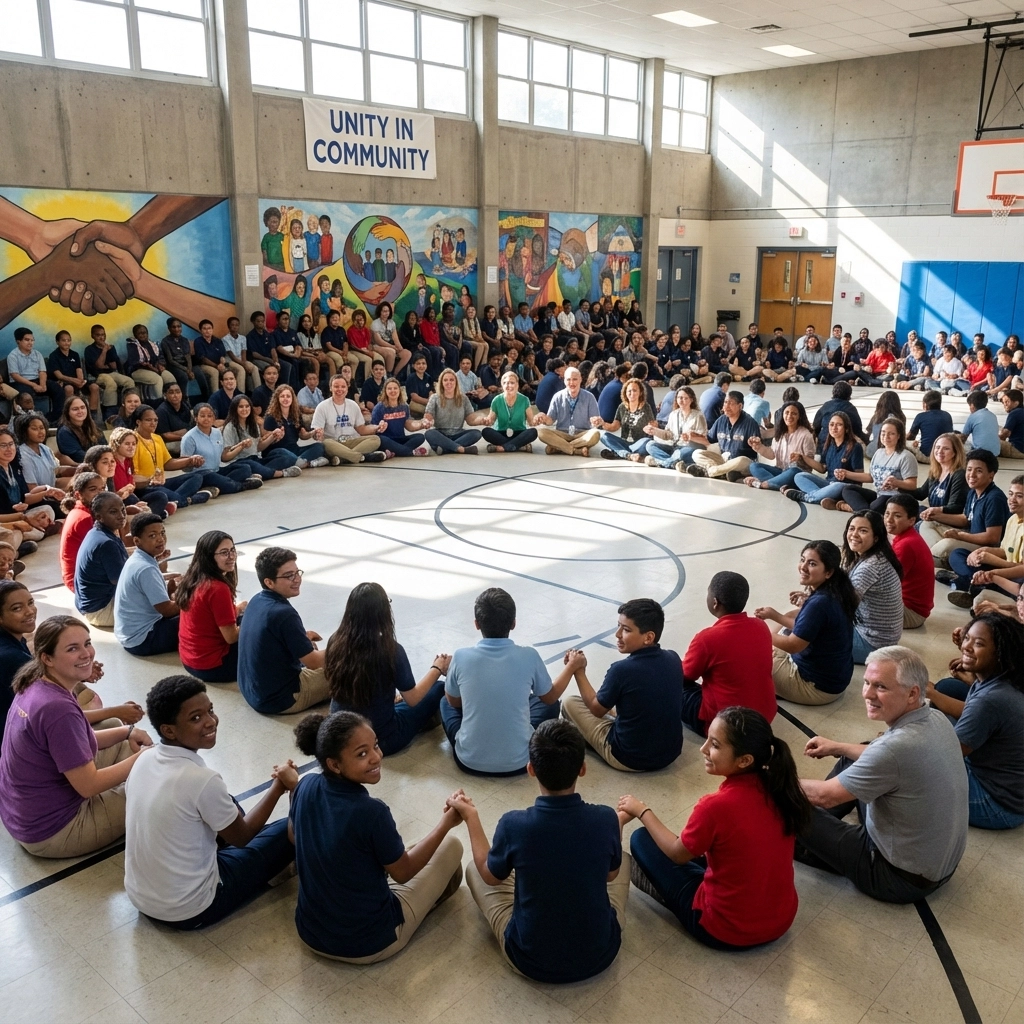
The Equity Imperative: Addressing Systemic Inequities
Perhaps most critically, restorative practices directly address the systemic inequities embedded in traditional discipline systems. By offering alternatives to punitive approaches that disproportionately harm marginalized students, these practices provide a pathway toward more equitable, inclusive, and supportive educational environments.
When we honor each student's inherent worth and focus on relationship repair rather than punishment, we create opportunities for healing that transcend individual incidents. We begin to transform systems that have perpetuated harm and build new foundations rooted in justice and collective care.
Moving Forward: Your Next Steps Toward Transformation
The evidence is clear: restorative practices create more positive, effective, and equitable learning environments for all students. But implementation requires commitment, training, and ongoing support to ensure lasting culture change.
If you're ready to transform your school's approach to discipline and community building, 2 Inspire Peace is here to support you. Our comprehensive training programs and Serenity Suite installations provide the foundation for sustainable change, backed by research and refined through years of implementation across diverse educational settings.
The journey toward healing-centered schools begins with a single step: and that step starts with relationship. When we center connection over control, accountability over punishment, and healing over harm, we create environments where every student can thrive.
Your school community deserves the transformative power of restorative practices. The question isn't whether change is possible: it's whether you're ready to take the first step toward building the resilient, equitable, and healing-centered schools our students need and deserve.
Ready to learn more about how 2 Inspire Peace can support your restorative practices journey? Visit 2inspirepeace.org to explore our training programs and discover how we can partner with your school to create lasting transformation.


Comments